

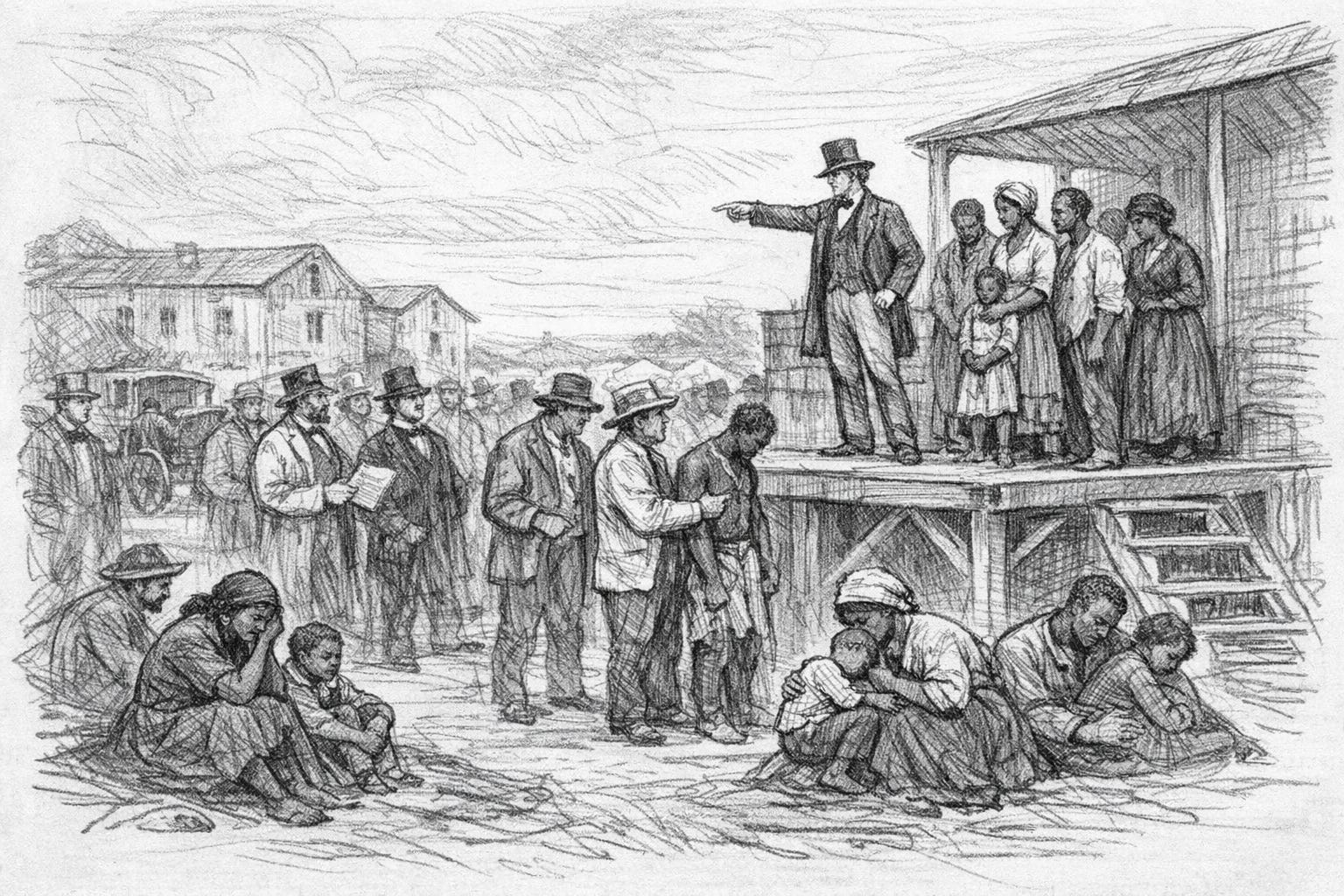
In the spring of 1859, on a stretch of land outside Savannah, Georgia the rain fell steadily for two days. The ground turned to mud beneath hundreds of waiting feet, and the sky hung low and gray over Ten Broeck Race Course. What happened there would later be remembered as the “Weeping Time,” one of the largest slave auctions in the history of the United States.
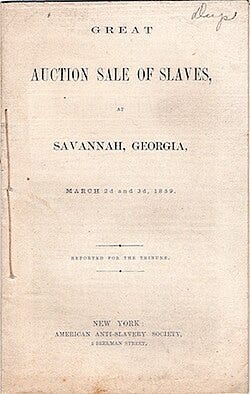
More than four hundred enslaved men, women, and children were gathered under rough wooden shelters. They belonged to the estate of Pierce Mease Butler, a wealthy plantation owner who had fallen deeply into debt from gambling. To settle what he owed, his human property was to be sold.
For the people waiting in the rain, the knowledge spread slowly but painfully. Families held tight to children, siblings, husbands, and wives. No one knew who would be sold together, and who would be torn apart.
The auction was organized by Joseph Bryan, a slave trader hired to manage the sale. Buyers arrived from across the South, planters from Georgia, South Carolina, Alabama, and Louisiana. They wore coats to keep out the damp air and carried notebooks where they wrote down prices and names. To them, the auction was business.
The rain began early on March 2. It drummed against the wooden roofs and ran down the backs of the crowded shelters. Mothers tried to quiet crying children. Some people prayed softly. Others stood silent, staring across the muddy field where the auction platform had been built.
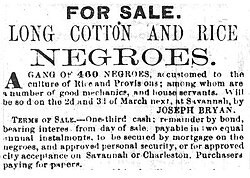
Then the bidding began.
One by one, families were called forward. The enslaved men and women were inspected like livestock, buyers looked at their teeth, felt their arms, asked about their ability to work in rice fields or cotton plantations. Young men strong enough for field labor brought the highest prices. Skilled workers, carpenters, drivers, and blacksmiths, were also in demand.
Children clung to their parents’ clothing. Sometimes a family was sold together, often they were not.
A mother might watch her husband sold to a planter from Louisiana. Minutes later, she could be sold to someone from South Carolina. Their children might go to entirely different buyers. Each separation brought cries, shouting, and grief that carried across the racecourse.
The rain never stopped.
Observers later said the constant crying, of parents calling for children, of children reaching for parents, blended with the sound of rainfall until it seemed the entire place was weeping. That is how the event earned its name the Weeping Time.
Over the two days of the auction, 436 enslaved people were sold. The sale brought in more than $300,000, a vast sum in 1859, equivalent to many millions today.
When it was over, wagons and boats carried the newly purchased people away in different directions across the South. Families that had lived together for generations on Butler’s plantations were permanently scattered. Some were sent deeper into Georgia to work on rice plantations along the coast. Others were transported farther away, to cotton plantations in Alabama, Mississippi, and Louisiana.
Some of the people sold that week would later appear in historical records and personal narratives. Decades later, a formerly enslaved man named William H. Robinson described the scene he remembered as a child, the rain, the shouting of auctioneers, and the sound of people crying as families were separated.
Witnesses remembered desperate scenes during the departures. Some mothers ran after wagons carrying their children until they were physically forced back by overseers. Husbands tried to bargain with buyers to purchase their wives as well, but most had no money and no power to change the outcome. The traders continued moving people quickly, determined to deliver their purchases.
One story later recorded involved a woman who had been separated from her young son during the auction. When the boy was placed in a wagon with another buyer’s group, she broke free from the crowd and chased the wagon through the mud, screaming his name. The guards eventually stopped her, and the wagon continued on without her.
The racecourse eventually disappeared from the landscape, and time moved on. Yet the memory of those two rainy days remained. Historians now recognize the Weeping Time as a stark example of the brutality of slavery in the United States, not only the forced labor, but the systematic breaking apart of families.
After the sale, Butler’s debts were paid, but the consequences for the enslaved people lasted decades. Some would not see their relatives again until after the end of American Civil War and the abolition of slavery in 1865.
Even long after freedom came, many families never found their relatives.
Further reading:
The Great Slave Auction (also called the Weeping Time) was an auction of enslaved Americans of African descent held at Ten Broeck Race Course, near Savannah, Georgia, United States, on March 2 and 3, 1859. Slaveholder and absentee plantation owner Pierce Mease Butler authorized the sale of approximately 436 men, women, children, and infants to be sold over the course of two days. The sale's proceeds went to satisfy Butler's significant debt, much from gambling. The auction was considered the largest single sale of slaves in U.S. history until the 2022 discovery of an even larger auction of over 600 slaves in Charleston, South Carolina.
An insightful slice of American history that makes evident that, not particularly long ago, our forefathers were truly lacking in decency and compassion towards those whom had been held in bondage, taken by force from their homes and sold by unfeeling capitalists to the highest lowlife bidder to satisfy the debs of a Caucasian fool.