

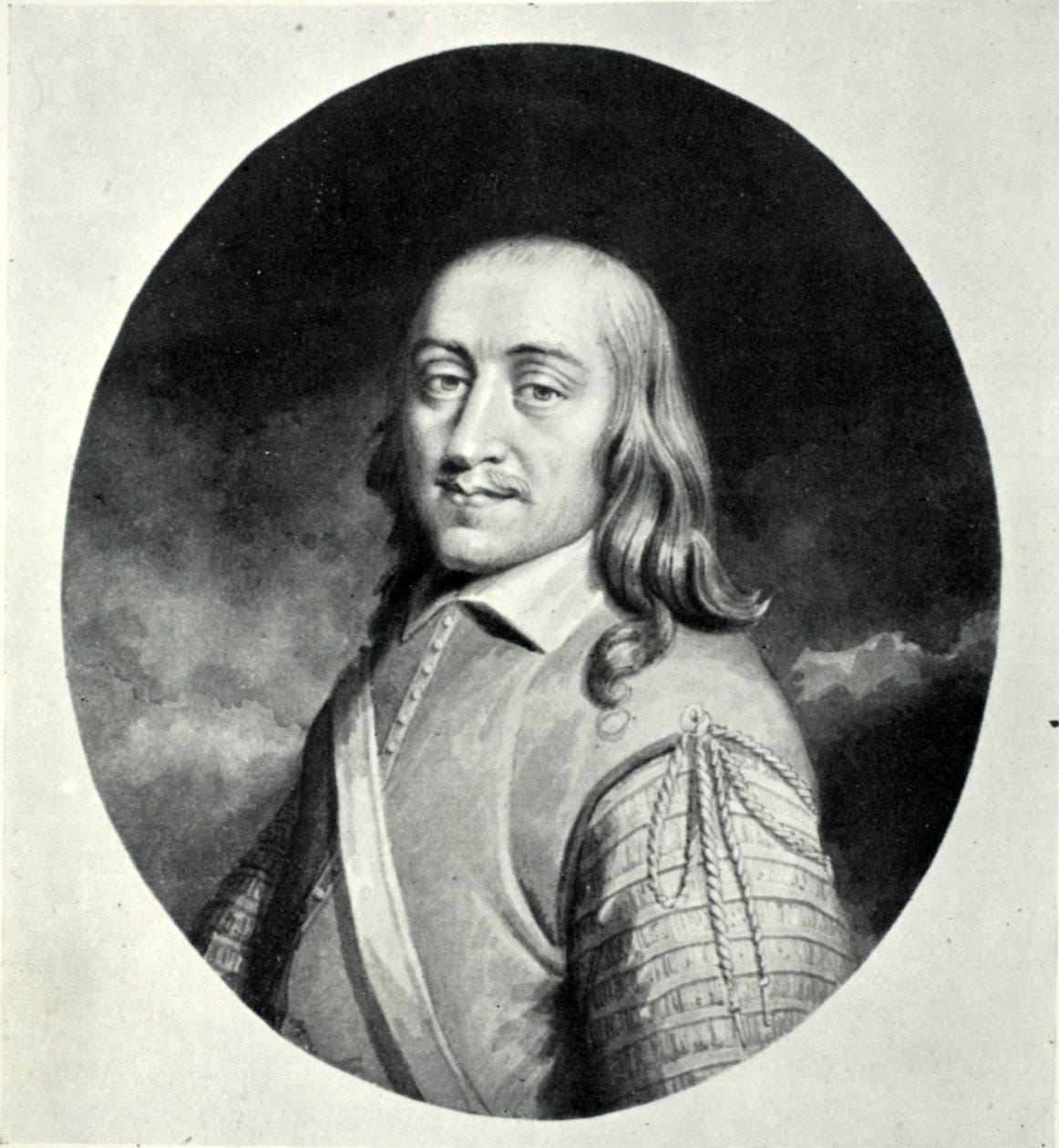
In the damp chill of an April morning in 1647, the market stalls of Smithfield were only just being raised, but already a small crowd had formed near the Nag’s Head tavern, where a man with fiery eyes and ink-stained fingers stood upon a cartwheel. John Lilburne “Freeborn John” was addressing the people. His coat was plain, his boots muddied, yet his voice carried with the authority of conviction.
“We fought the King to end tyranny,” he thundered. “Shall we now bow to new masters? Are we not freeborn Englishmen?”
Some nodded, some crossed arms skeptically. The war had ended for most, King Charles was in Parliament’s custody, and the New Model Army was divided across the counties, but peace was not simple. Lilburne sensed that the struggle had only changed shape. Many who had taken up arms did so believing they fought for liberty, not merely for the substitution of one ruling power for another.
Standing near the edge of the crowd was Richard Overton, lean-faced and restless, a writer with pamphlets hidden beneath his jerkin. He had been imprisoned for printing seditious tracts, he likely would be again. When Lilburne stepped down, Overton grasped his arm.
“John,” he murmured, “Parliament grows uneasy, they speak of sedition again.”
Lilburne scoffed. “Let them speak, we will speak louder.”
Across England, the New Model Army, the same force that had delivered Parliament victory, was growing discontented. Men who had fought four years expected their pay. Instead, they received arrears, neglect, and suspicion. Some officers warned them to disperse quietly and return to their villages. But a soldier who has risked his life does not relinquish his voice so easily.
Among those soldiers was Edward Sexby, who had marched at Naseby and had seen too much blood to accept silence. He gathered men at night by the flickering light of a tallow candle, spreading the words of the Levellers, that government should rest in the common people, that laws should apply to all equally, that imprisonment without charge was unlawful, that elections should be regular and representative.
“We have not fought to be slaves,” Sexby declared, and the men listened.
Meanwhile, leaders in Parliament, such as Oliver Cromwell and Henry Ireton, saw the Levellers’ ideas as dangerous. They acknowledged that reforms were needed but feared that the common people, given too much influence, would tear down the very order of society. England had always been governed from above, they did not intend that to change.
By the late summer of 1647, representatives from the regiments, Agitators as they were called, gathered with officers and Parliament men at Putney, in a panelled room of the church beside the river. They argued, and the table was strewn with papers, proposals, declarations, drafts of constitutions.
There, the Levellers presented a document called The Agreement of the People. It was bold, radical and it demanded:
• Representation based on population
• Regular elections
• A government accountable to the people
• Liberty of conscience
• Equality before the law
Cromwell listened gravely, fingers pressed to his lips, his son-in-law, Henry Ireton, spoke sharply in response.
“No man hath a share in government without a fixed interest in the kingdom,” Ireton insisted. “If you give the vote to those who have no property, you will overthrow all stability. Authority must rest with men of substance.”
Lilburne, overhearing later, would say bitterly, “Then it is not for the people they fought at all, but only for themselves.”
In the Putney debates, one voice stood firm among the Agitators, Colonel Thomas Rainsborough, tall, earnest, and persuasive. When he spoke, even Cromwell’s officers listened.
“The poorest he that is in England hath a life to live as the greatest he.” Rainsborough declared. “And therefore truly, sir, I think it clear, that every man that is to live under a government ought first by his own consent to put himself under that government.”
His words shook the room. The line between the old world and a possible new one was suddenly visible.
But the debates ended unresolved. Rumors spread that the King was negotiating in secret, and the army moved to secure power. The moment of possibility passed like smoke.
In the following year, the tides of power shifted again. The King attempted to escape, aligning with Scottish forces, the Second Civil War flared. The Army defeated the Royalists once more. Parliament wavered and the Army, fearing betrayal, marched on London.
In January 1649, the unthinkable occurred, King Charles I was tried and executed outside the Banqueting House.
Some Levellers believed this was a step toward the liberty they sought. Others saw that power had not been given to the people, but had merely changed hands, from monarch to army leadership.
The printing presses worked ceaselessly. Pamphlets by Overton, William Walwyn, and Lilburne spread through London, England’s New Chains Discovered and An Agreement of the People Restored. They accused Cromwell’s Council of State of replacing tyranny with tyranny.
The government did not take the accusation kindly.
Lilburne, Walwyn, Overton, and Thomas Prince were arrested and thrown into the Tower of London. Crowds gathered outside in protest. Soldiers in several regiments wore sea-green ribbons, the color of Leveller allegiance.
In some garrisons, the discontent boiled into open revolt.
It was April 1649 at Bishopsgate when a regiment refused to obey orders until the Leveller leaders were released and the Agreement of the People was enacted. Sexby rode among them, urging restraint and resolution, but Cromwell and Fairfax responded with speed and severity. The leaders of the mutiny were arrested, others dismissed.
But the final stand occurred a month later, at Burford, in the rolling green of Oxfordshire.
A troop of cavalry, inspired by Leveller ideals, seized their officers and declared they would not disband until the promises made to the soldiers were honored. They marched under the motto:
“For the Honest Soldier’s Cause.”
Cromwell acted with characteristic swiftness. Riding by night, he caught the mutineers asleep in Burford Churchyard. The town walls echoed with the clatter of hooves and the barking of orders.
Sexby was elsewhere, organizing, and thus escaped. But others were not so fortunate, Cornet Thompson, Private Church, and Corporal Perkins were chosen for execution. The next morning, they were shot against the church wall. Thompson died defiantly, crying, “For freedom we fought, and for freedom we die!”
The bullet slammed him backward, and the Leveller cause shuddered with the blow.
After Burford, the movement did not vanish, but its influence ebbed. Lilburne was released in 1653, only to be imprisoned again, he died in 1657, worn down by confinement and relentless struggle. Walwyn retired into obscurity. Overton fled to the Netherlands. Rainsborough had already been murdered in 1648, stabbed in a nighttime assault by Royalist agents.
The dreams they held, of a representative democracy based on universal male suffrage, of freedom of conscience, of equality before the law, did not find fertile ground in their own lifetime. England would pass into the Protectorate of Cromwell, and later, the Restoration of the Monarchy.
But ideas, once spoken, do not die.
In later years, those who argued for constitutional rights, for civil liberties, for the sovereignty of the people, looked back and found in the Levellers the echo of their own voices.
They had not succeeded, but they had spoken first.
And in the quiet of English history, beneath parliaments and revolutions yet to come, their words continued to stir:
“The poorest he that is in England hath a life to live as the greatest he.”
Further reading;
The Levellers were a political movement active during the English Civil War who were committed to popular sovereignty, extended suffrage, equality before the law and religious tolerance.
Mai’s retelling of the Levellers doesn’t just recount history it breathes life into it. You can almost feel the damp April air, hear Lilburne’s voice cutting through the morning haze, and sense the restless hope in the crowd. These weren’t distant figures in dusty books—they were people, flawed and fiery, aching for justice. Rainsborough’s words “The poorest he that is in England hath a life to live as the greatest he”—don’t just echo, they tremble with truth. The heartbreak of Burford, the quiet defiance of pamphlets, the longing for a fairer world it all feels painfully familiar. They didn’t win, but they dared to dream aloud. And in that, they became immortal.
For me, this is one of the big what ifs? in English history. What would England (and the world) be like if Cromwell failed to suppress the Levellers?