

For generations, the Ainu people of northern Japan lived in the shadows of history. Their culture was suppressed, their land taken, and their identity nearly erased. Yet today, thanks to breakthroughs in ancient DNA research, their story is returning with powerful clarity. Science is revealing that the Ainu are not simply a cultural minority, they are living descendants of some of Japan’s earliest inhabitants, and their genetic legacy is reshaping how we understand the origins of an entire nation.
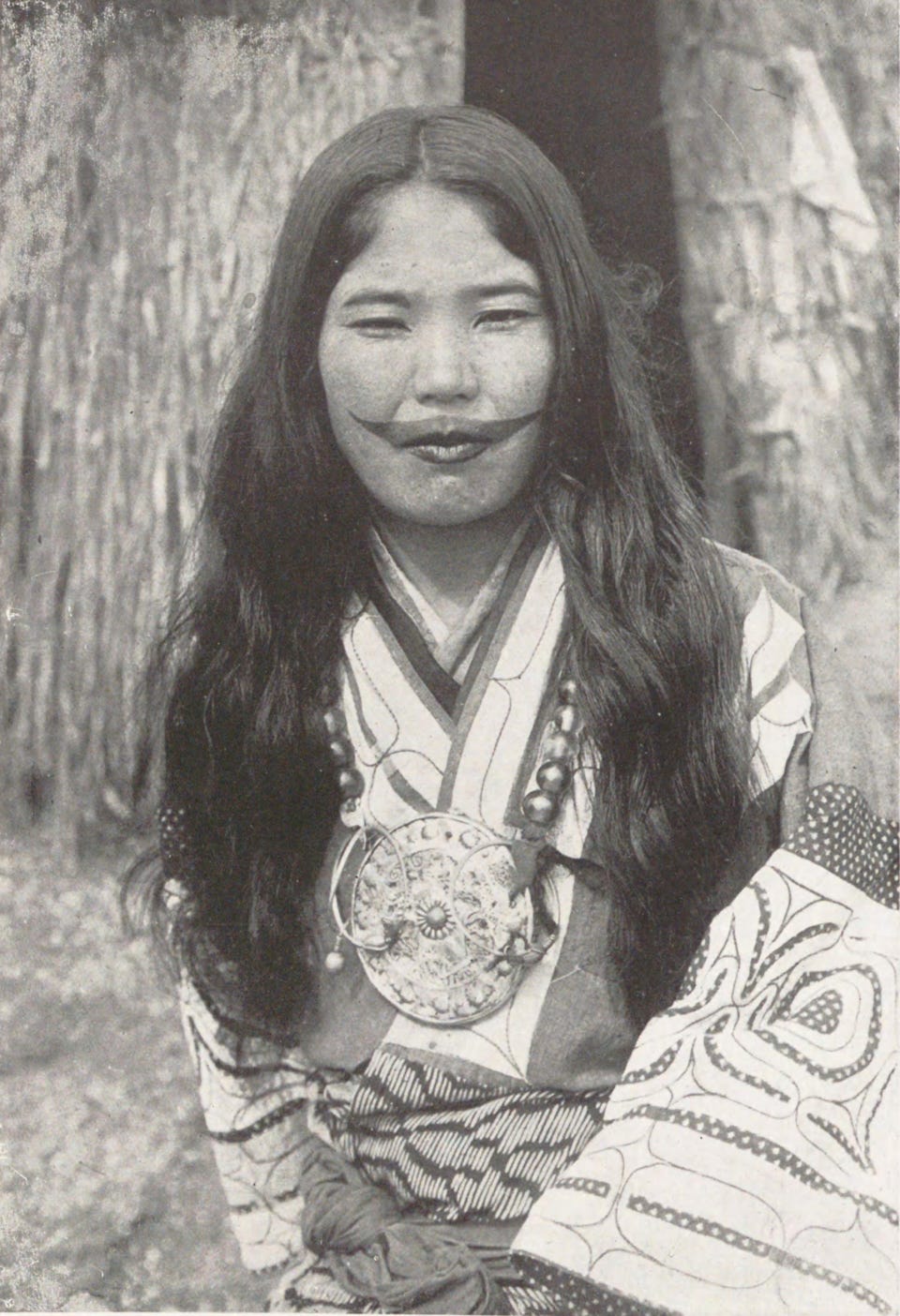
To understand the Ainu, we must travel back more than 10,000 years to the time of the Jomon people. The Jomon were among the earliest known inhabitants of the Japanese archipelago. They lived as hunter-gatherers and coastal foragers, developing a rich culture long before rice farming transformed East Asia.
For decades, archaeologists and historians debated what happened to them. Did they disappear? Were they replaced?
Genetic evidence shows that the Ainu are the closest living descendants of the Jomon. Their genomes preserve ancient lineages that have almost vanished elsewhere, including rare paternal haplogroups like D1b, which are found only in a few isolated populations across Asia.
This discovery places the Ainu in a remarkable position. They are not simply another ethnic group within Japan. They are direct biological links to one of humanity’s oldest surviving cultures in the region.
The Ainu traditionally lived in some of the harshest environments in East Asia, Hokkaido, Sakhalin, and the Kuril Islands. Winters there are long, cold, and unforgiving. Researchers have identified genetic traits in Ainu populations associated with thermo regulation and fat metabolism, adaptations that help the human body survive cold climates. These traits resemble those found in Arctic populations such as the Inuit.
Their traditional diet also shaped their biology. Rich in seafood, seaweed, and seasonal plants, it left genetic signatures linked to efficient processing of fatty acids and omega-3 nutrients.
In other words, the Ainu were not just living in northern climates, they were biologically adapted to thrive there. Their bodies, like their culture, were shaped by thousands of years of close interaction with their environment.
Around 2,300 years ago, everything changed.
A new group of migrants, known as the Yayoi, arrived from mainland Asia. Unlike the Jomon, they were rice farmers. Their agricultural lifestyle allowed them to support larger populations and expand rapidly. Over time, Yayoi culture spread across Japan.
For many years, scholars believed modern Japanese people were primarily descendants of a mixture between the Yayoi and the earlier Jomon. But the Ainu complicate this picture.
Their genetic distinctiveness shows that not all Jomon people were absorbed into the new population. Some groups survived with their ancestry largely intact, maintaining their identity for thousands of years.
This means Japan’s origins were not a simple blending of two groups. Instead, they involved multiple populations, migrations, and survival stories. Japan’s history is far more complex than once believed.
Despite their ancient roots, the Ainu did not share equally in Japan’s modern development.
During the Meiji era in the late 1800s, Japan underwent rapid industrialization and nation-building. In the process, the government targeted the Ainu for assimilation.
Their language was banned, lands were seized and cultural practices were suppressed. They were expected to abandon their identity and become “Japanese.”
This was not merely cultural change, it was cultural erasure.
By the early twentieth century, many believed the Ainu as a distinct people would disappear entirely, but they did not.
When Europeans first encountered the Ainu centuries ago, they were struck by their physical appearance. The Ainu often had features that differed from mainland Japanese populations, including heavier body hair and different facial characteristics. These differences puzzled early observers and unfortunately, instead of seeking understanding, many colonial-era scientists created racist theories to explain what they saw.
Now, genetics is providing answers those early observers could not. The Ainu were not anomalies or outsiders, they were survivors of an ancient lineage.
Today, the Ainu are gaining more visibility and rights, and science is playing a key role in that shift. Their genetic uniqueness doesn’t just tell us about ancient migrations, it tells us about resilience, survival and the importance of cultural preservation.
Further reading;
Nakagome, S. et al. (2021). “Jomon genome sheds light on East Asian population history.” Science Advances
https://www.science.org/doi/10.1126/sciadv.abc6426Jinam, T. et al. (2012). “The history of human populations in the Japanese Archipelago inferred from genome-wide data.” Nature Communications
https://www.nature.com/articles/ncomms2322Hudson, Mark J. (1999). Ruins of Identity: Ethnogenesis in the Japanese Islands
https://www.amazon.com/Ruins-Identity-Ethnogenesis-Anthropology-Contemporary/dp/0824821318Siddle, Richard. (1996). Race, Resistance and the Ainu of Japan
https://www.amazon.com/Race-Resistance-Ainu-Japan-Routledge/dp/0415195216Shimizu, A. (2020). “The Ainu and DNA: What Ancient Genomes Tell Us.” National Museum of Japanese History
https://www.rekihaku.ac.jp/english/publication/rekihaku/187/witness.html
This is another one of my favorite groups of humans. There are traditions that survive as well as the genetics. However I have never heard of any stories, fables, or mythologies. The hair and the lip tattoos, and bear rituals, I believe are significant clues to lineage. When I first heard of the Ainu, I was stuck on Northern Japan, and completely ignored the geographical proximity to Russia.
Thank you for sharing. This is my first introduction to the Ainu - so interesting.